
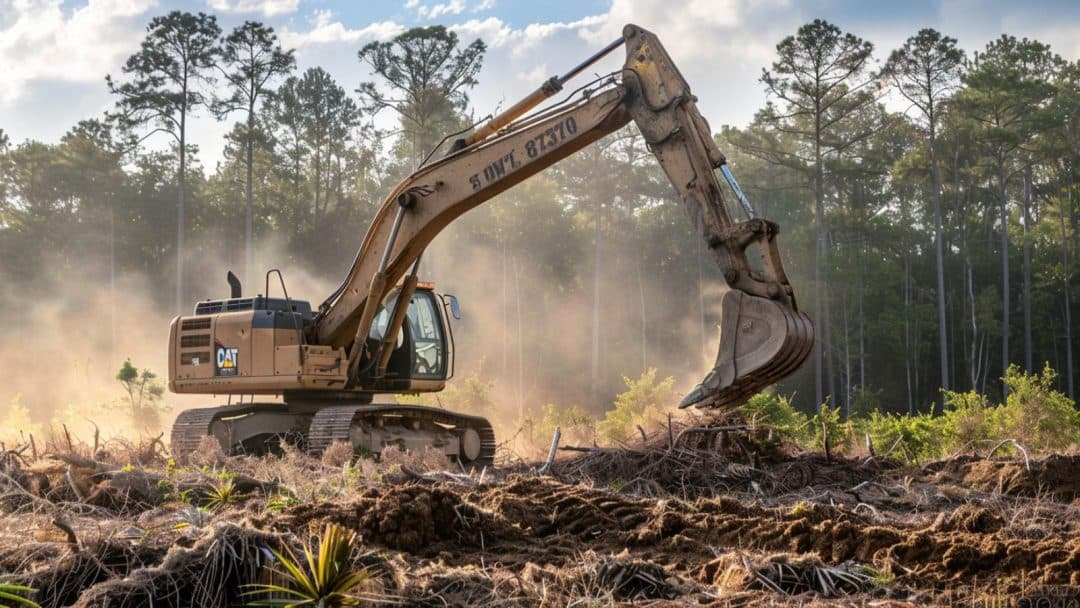
When a structure has reached the end of its useful life — a house that is not worth repairing, a barn that is collapsing, a mobile home that needs to come off the lot, a concrete slab from a building that is already gone — somebody has to take it apart, load the debris, haul it off, and leave the ground ready for whatever comes next. That is demolition work, and Ward Excavation has been handling it across southeastern North Carolina since 2001.
The structures we demolish most often are older residential buildings, mobile homes, agricultural outbuildings (barns, sheds, equipment shelters), and concrete foundations and slabs. Occasionally we handle commercial structures. The common thread is that the structure is coming down to make way for new construction, to eliminate a safety hazard, or to clean up a property for sale.
Demolition generates a lot of debris — wood framing, roofing, concrete, metal, drywall, wiring, plumbing. Managing that debris stream is half the job. What can be recycled gets separated. What cannot be recycled gets loaded and hauled to an approved disposal facility. The site is graded clean after the last truck leaves.
What we haul, what we salvage, what we recycle
A demolished building produces a mixed debris stream, and handling it responsibly means sorting the material into categories rather than dumping everything in one pile. Metal — structural steel, roofing tin, copper wiring, plumbing pipe — has scrap value and gets pulled out for recycling. Concrete and masonry can be crushed and reused as fill or aggregate on other projects. Clean wood framing goes to approved disposal. Roofing material, drywall, insulation, and mixed debris go to a lined disposal facility.
Disposal fees are a significant part of demolition cost. Mixed construction debris costs more to dispose of than separated materials because the disposal facility has to sort and process it. Separating materials on site — pulling metal, breaking concrete away from wood framing, keeping clean fill separate from contaminated material — reduces disposal cost. We do this sorting as part of the demolition process rather than charging for it as a separate operation.
There is one category of material we do not handle: hazardous materials. Older structures — particularly those built before the mid-1980s — may contain asbestos in siding, floor tile, pipe insulation, or roofing material. Some contain lead paint. Some have underground storage tanks or chemical residue from agricultural or commercial use. We identify these materials during the pre-demolition walk-through and refer the property owner to a licensed abatement contractor. The abatement has to be completed and documented before we bring in the excavator. This is not a limitation we apologize for — it is the law, and it protects the property owner, the crew, and the disposal facility.
What's included
House demolition
Full demolition of residential houses, including foundation removal. Covers wood-frame, block, and brick structures. The foundation slab or footings can be removed or left in place depending on whether new construction is planned on the same footprint.
Mobile home and manufactured home removal
Demolishing and removing mobile homes, manufactured homes, and modular structures from the lot. Includes skirting, decks, tie-down anchors, and associated debris. Mobile home demolition is one of our most common residential demo jobs.
Barn and outbuilding demolition
Taking down barns, sheds, equipment shelters, chicken houses, and other agricultural or residential outbuildings. Older agricultural buildings often contain metal roofing and framing that has scrap value.
Concrete and slab removal
Breaking and removing concrete foundations, slabs, driveways, retaining walls, and other flatwork. Concrete is separated from rebar and other embedded material and hauled for crushing and recycling where possible.
Selective demolition
Removing specific portions of a structure while preserving the remainder — taking down an addition, removing a chimney, or stripping a building to the structural frame for renovation. Requires more care and slower equipment work than full demolition.
Debris hauling and disposal
Loading and hauling all demolition debris — sorted by material type — to appropriate disposal or recycling facilities. Disposal cost is included in the demolition estimate so the property owner sees one number, not a separate hauling bill.
Post-demolition grading
After the structure and debris are gone, we grade the site to establish drainage and leave a clean surface. If new construction is planned, the grading aligns with the site plan for the new building.
What to expect
- 1
Pre-demolition walk-through
We inspect the structure, identify the material types, check for potential hazardous materials, assess access, and plan the demolition sequence. If hazmat is identified, we refer the owner to a licensed abatement contractor before proceeding.
- 2
Utility disconnection confirmation
All utilities — power, gas, water, sewer — must be disconnected and confirmed off before demolition begins. This is the property owner’s responsibility, and we verify it before bringing equipment on site.
- 3
Demolition and material separation
The structure comes down. Metal is pulled for scrap recycling. Concrete is separated. Wood and mixed debris are loaded for disposal.
- 4
Debris hauling
Loaded trucks haul sorted debris to the appropriate facilities — scrap yard, concrete recycler, or lined disposal site. Multiple loads are common on larger structures.
- 5
Site cleanup and grading
After the last debris load leaves, the site is graded smooth and left ready for new construction, landscaping, or whatever the owner has planned.
Questions homeowners ask
- What affects the cost of demolition?
- Structure size and type, the material mix (concrete and masonry are heavier and more expensive to haul than wood framing), whether hazmat abatement is needed before we start, access conditions on site, and disposal fees at the receiving facility. Disposal fees are a larger component of demolition cost than most property owners expect — they can account for a third or more of the total on larger structures. We walk the structure, assess all of these variables, and write a quote that includes demolition, debris hauling, and site cleanup as one scope.
- Do I need a permit to demolish a building?
- Most counties in our service area require a demolition permit from the building inspections office. Permit requirements vary by county, structure type, and size. The property owner or their general contractor is responsible for obtaining the permit before work starts. We can tell you what is typically required during the walk-through, but we do not pull permits on behalf of the owner.
- What about asbestos and hazardous materials?
- We do not handle hazardous material abatement. Structures built before the mid-1980s may contain asbestos siding, floor tile, pipe insulation, or roofing material. Some contain lead paint or underground storage tanks. We check for these materials during the pre-demolition walk-through and refer the property owner to a licensed abatement contractor if anything is identified. Abatement must be completed and documented before demolition can proceed. This is a regulatory requirement, not an optional step.
- How long does a typical demolition take?
- A single-family house or mobile home typically takes one to two days including debris hauling. Larger structures or those with concrete foundations may take three to four days. The timeline depends on structure size, material volume, access, and how many loads need to go to the disposal facility.
- Can you demolish a structure and build on the same site?
- Yes. We handle demolition, debris removal, and site preparation as a continuous scope. After the structure is down and the debris is hauled, we grade the site and prepare the building pad for new construction. This pairs with our site work and pad building service for the next phase.
- Do you recycle demolition materials?
- We separate recyclable materials during the demolition process. Metal — steel, aluminum, copper — goes to scrap recycling. Concrete goes to crushing facilities where available. Clean wood is disposed of separately from mixed debris. Material separation reduces disposal cost and keeps recyclable material out of the landfill.
Permits and official resources
Official sources worth knowing before this kind of work starts. We handle the machine side; these are the agencies that govern the paperwork side.
Where we offer demolition
Ward Excavation runs a 150-mile service radius from our Whiteville yard. Licensed and insured in North Carolina and South Carolina, we work demolition jobs across the counties below and 25 more — from the Columbus County interior out to the Brunswick coast and across the line into Horry County, SC.
Jobs that go hand in hand with demolition
Ready to start your project?
Family-run since 2001. Licensed and insured in NC and SC.