
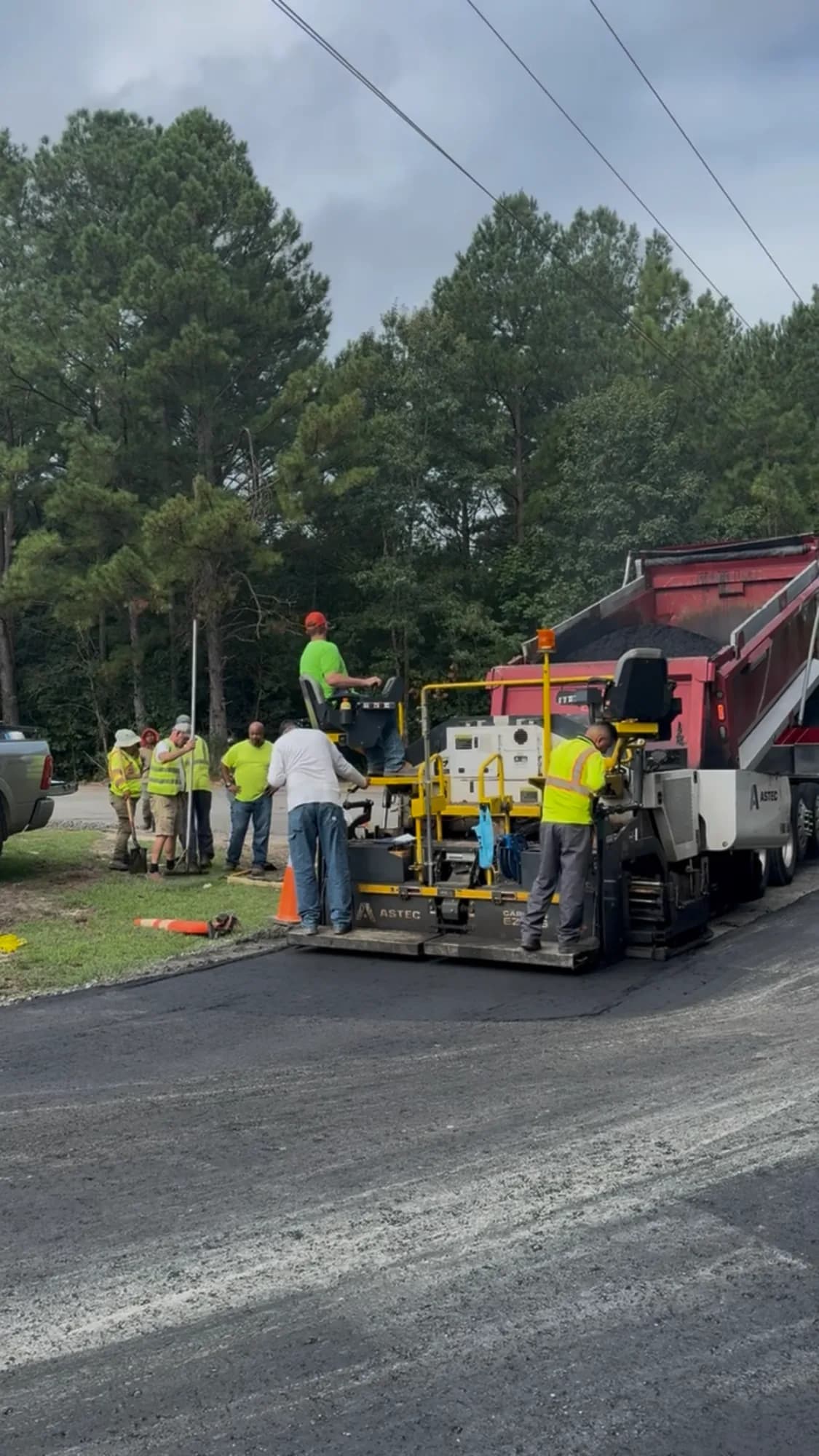
The question is not whether to surface a driveway — it is which surface fits the property, the traffic, and the budget. Ward Excavation handles asphalt paving, chip-seal installation, and gravel driveway construction across our 33-county service area. We also resurface and patch existing pavement that has cracked, sunken, or separated from its base.
Paving is the newest addition to our service lineup, and it exists because we were already doing the base work. Every paved surface sits on prepared ground — compacted sub-base, proper grade for drainage, culverts where the driveway crosses a ditch. We have been doing that earthwork since 2001. Adding the surface material on top is the natural extension. Because we own the excavation and grading equipment, we can prep the base and lay the surface as a single scope instead of handing the site off to a separate paving contractor.
If you are not sure whether your driveway should be gravel, chip-seal, or asphalt, the driveway and road maintenance page compares all three surfaces in detail. This page covers the paving-specific work — asphalt, chip-seal, resurfacing, and patching.
When to pave, and when not to
Asphalt paving is the right answer for high-traffic residential driveways, commercial parking areas, and private roads that carry heavy or frequent vehicle loads. A properly installed asphalt surface sheds water cleanly, handles daily traffic without surface degradation, and lasts fifteen to twenty-five years before needing a major resurface. For properties where appearance matters — houses being sold, commercial frontage, entrances that visitors see every day — asphalt looks finished in a way that gravel and chip-seal do not.
Asphalt is the wrong answer for several common situations, and we will tell you that during the estimate if your property is one of them. Low-volume rural driveways that see a few trips per day do not need asphalt — gravel costs a fraction of the price and is easier to maintain over the life of the driveway. Very long driveways where the paving cost would be disproportionate to the property value are usually better served by chip-seal or gravel. And sites where the sub-base has not been properly prepared should not be paved at all — asphalt laid on soft, wet, or poorly drained ground will crack and settle within a few years regardless of how thick the pavement is.
We tell customers this because our reputation depends on driveways that last, not on driveways we paved. If a property owner calls asking for asphalt and we walk the site and see conditions that favor gravel or chip-seal, we say so. The estimate includes our recommendation and the reasoning behind it. The property owner decides.
What's included
New asphalt driveways
Full-depth hot-mix asphalt installation for residential driveways. Includes base stone, compaction, asphalt placement in lifts, rolling, and edge work. The base prep is included in every paving quote because it is what determines whether the surface lasts.
Commercial parking areas
Asphalt paving for parking lots, loading areas, and commercial access drives. Commercial pavement is thicker than residential and designed for heavier loads.
Chip-seal driveways
Liquid asphalt sprayed on a prepared base and covered with crushed stone chips, then rolled. Chip-seal costs less than full-depth asphalt, sheds water better than gravel, and works well for longer rural driveways where full asphalt would be prohibitively expensive.
Asphalt resurfacing
Overlaying or mill-and-fill replacement of existing asphalt that has cracked, faded, or settled. Resurfacing extends the life of an existing paved surface without full removal and reconstruction.
Patching and repair
Repairing localized failures — potholes, alligator cracking, edge crumbling, areas where the pavement has separated from a culvert or apron. Patching stops the damage from spreading and buys time before a full resurface.
Culvert and apron work
Installing or replacing culverts where the driveway crosses a roadside ditch, and paving the apron where the driveway meets the county road. Culvert and apron work is often the most visible part of a driveway project and the part that code enforcement notices.
Base prep as standalone scope
For property owners who have a separate paving contractor handling the surface, we do the base preparation — grading, compaction, sub-base stone, drainage — as its own scope. This pairs with our grading and site work services.
What to expect
- 1
Surface assessment and recommendation
We walk the site, evaluate the traffic, the slope, the drainage, and the sub-base condition, and recommend the surface type that fits. If we think asphalt is the wrong call, we say so.
- 2
Old surface removal (if needed)
Existing pavement that has failed gets removed — milled or broken out and hauled. This exposes the sub-base for inspection and repair.
- 3
Sub-base preparation
The sub-base is graded to crown, compacted, and reinforced with geotextile fabric where the native soil is soft. Soft spots are dug out and replaced. This step determines whether the pavement will last or fail early.
- 4
Paving
Asphalt is placed in lifts and rolled smooth. Chip-seal is sprayed and stone-covered in a single pass. Each method follows its own installation sequence.
- 5
Edge work and tie-ins
Shoulders are graded to match the paved surface. Where the driveway meets a county road, the apron and culvert tie-in are finished to match the road grade.
Questions homeowners ask
- What goes into the cost of paving a driveway?
- Driveway length and width determine the asphalt volume. After that: sub-base condition (does the base need to be built from scratch, repaired, or just regraded), old surface removal if there is existing pavement, drainage and culvert work, and the surface type (asphalt is more expensive per square foot than chip-seal). Every paving quote includes base prep because we will not lay asphalt on a base we have not verified. Call (910) 981-1119 to schedule a site visit.
- What is the difference between asphalt and chip-seal?
- Asphalt is a continuous hot-mix surface laid in lifts and rolled smooth — what most people picture when they think of a paved driveway. Chip-seal is a sprayed liquid asphalt coat covered with crushed stone chips and rolled once. Chip-seal has a rougher texture, costs less per square foot, and works well on longer rural driveways. Asphalt produces a smoother surface, handles heavier traffic, and lasts longer before needing a major resurface. Both require a properly prepared base to perform.
- How long does an asphalt driveway last?
- A properly installed asphalt driveway on a well-prepared base typically lasts fifteen to twenty-five years before needing a major resurface. Chip-seal typically needs a refresh coat every seven to twelve years. The biggest factor in pavement lifespan is what happens underneath — a good base drains water away from the pavement and distributes load evenly. A bad base lets water soften the subgrade and the pavement cracks from below.
- Why would you recommend against paving?
- If the sub-base is soft, wet, or poorly drained and would need extensive repair before paving, the total cost of base prep plus asphalt may not be justified for the property. If the driveway is very long and the traffic is light, gravel is often the more practical and affordable choice. And if the drainage around the driveway has not been addressed, paving over it will just produce expensive pavement that fails in a few years. We would rather recommend gravel and solve the drainage problem than sell a paving job that will not last.
- Is base prep included in the paving quote?
- Always. We do not quote paving separately from the base work because the base is what determines whether the surface lasts. The quote covers old surface removal (if applicable), sub-base grading, compaction, geotextile fabric where needed, base stone, and the paving surface. One number, one scope, one contractor responsible for the result.
- Can you resurface my existing asphalt driveway?
- If the existing base is structurally sound and only the surface has failed — cracking, fading, minor settlement — we can overlay it with fresh asphalt or do a mill-and-fill where the damaged areas are cut out and replaced. If the base has failed — large settlement areas, water pumping up through cracks, sections that move underfoot — the driveway needs to be removed and rebuilt, not resurfaced. We can tell the difference during the site visit.
Permits and official resources
Official sources worth knowing before this kind of work starts. We handle the machine side; these are the agencies that govern the paperwork side.
Where we offer paving
Ward Excavation runs a 150-mile service radius from our Whiteville yard. Licensed and insured in North Carolina and South Carolina, we work paving jobs across the counties below and 25 more — from the Columbus County interior out to the Brunswick coast and across the line into Horry County, SC.
Jobs that go hand in hand with paving
Ready to start your project?
Family-run since 2001. Licensed and insured in NC and SC.