
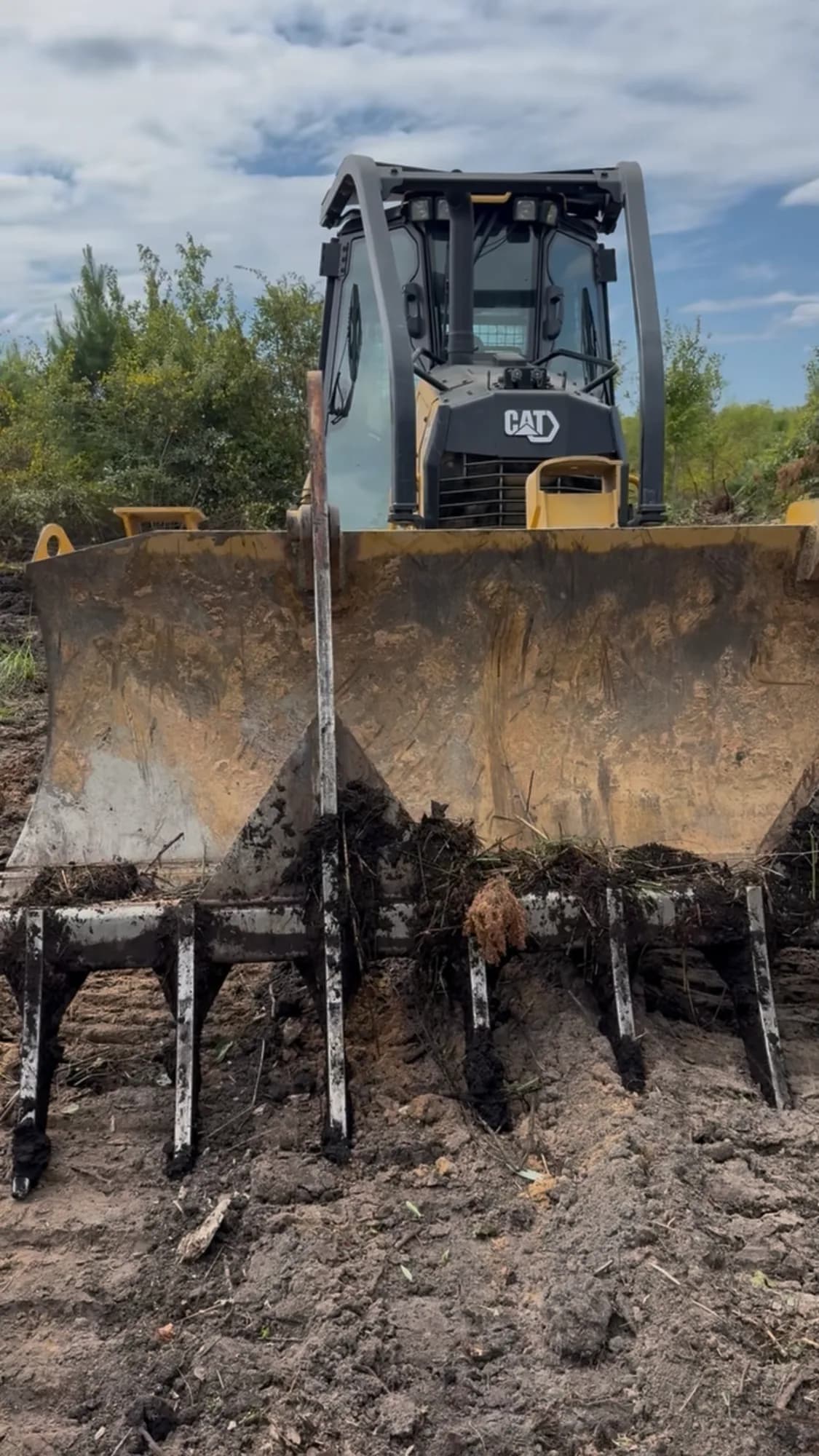
A piece of ground covered in trees, stumps, and brush is not a building site. It is a piece of ground that needs to become a building site — and how it gets cleared determines whether the construction that follows goes smoothly or turns into a fight with the land. Ward Excavation has cleared residential lots, agricultural tracts, and commercial parcels across southeastern North Carolina since 2001.
The people who call us for land clearing are usually in one of three situations. They have bought a wooded lot and need it ready for a house. They have farmland that has grown over and needs to be brought back into production. Or they have a commercial tract that requires full clearing, stumping, and rough grading before a general contractor can begin site work. Each situation calls for a different approach, different equipment, and a different timeline.
Most of our clearing work happens in the coastal plain counties between Whiteville and the coast — Columbus, Bladen, Brunswick, Pender, New Hanover — where the typical ground cover is loblolly pine, scrub oak, sweetgum, and heavy underbrush. Pine-dominant lots clear faster than hardwood bottoms because the wood is softer and the root systems are shallower. Hardwood bottoms along creek corridors take more time and heavier equipment. We price both honestly based on what the site actually has on it, not a generic per-acre rate.
Clearing methods and when to use each
Land clearing is not one operation — it is a family of operations, and the method that fits depends on the terrain, the timber, and what the property owner wants the land to look like when the work is done.
Push-and-pile clearing uses a bulldozer to push standing timber, stumps, and brush into windrows or piles at the edge of the site. This is the fastest method for heavy timber on open ground and the one most builders want for new-construction lots where every tree and root needs to come out. The material ends up in piles that either get hauled off, burned (where local regulations allow), or ground with a tub grinder. Push-and-pile leaves bare dirt, which means erosion control and grading need to follow immediately.
Forestry mulching takes a different approach — a drum mulcher grinds standing trees, brush, and small stumps into a layer of mulch that stays on the ground. The mulch layer holds the soil, reduces erosion, and eliminates the need for burn piles and haul-off. Mulching is ideal for lots with small to mid-size timber, pasture reclamation, and selective clearing where you want to keep certain trees. For a deeper look at how mulching works and where it fits, see our forestry mulching page.
Grubbing is the targeted removal of stumps and root systems after the standing timber has been cut or pushed. On building sites where foundations, utilities, or paving will go in, every root system in the work area needs to come out. Grubbing is slower and more expensive than mulching because it pulls material from below grade, but it is non-negotiable for sites that require clean fill and compaction.
On most jobs we use a combination of these methods. A residential lot might get push-and-pile clearing on the building footprint, selective mulching along the property line for privacy buffer, and grubbing only where the driveway and foundation will go. The estimate specifies which method goes where and why. For a plain-language walkthrough of what moves a clearing quote up or down, see what land clearing costs in NC actually depend on.
What's included
Residential lot clearing
Full clearing for new home construction — trees, brush, stumps, and debris removed to expose buildable ground. We clear to the setback lines and leave the edges the owner specifies.
Commercial site clearing
Multi-acre clearing for commercial pads, subdivisions, and industrial sites. Includes full stumping and rough grading. Often pairs with our site work and pad building service for the next phase.
Agricultural land clearing
Bringing overgrown fields, fence lines, and tree-invaded pasture back into working condition. Common on Bladen and Sampson County farm parcels where timber has encroached on cropland over decades.
Selective clearing
Removing specific trees or understory while preserving mature hardwoods, specimen trees, or buffer zones the owner wants to keep. Requires more finesse than full clearing and is typically done with a mulcher or hand-falling rather than a bulldozer.
Storm and hurricane cleanup
Removing downed timber, uprooted stumps, and storm debris from properties after hurricanes or major storms. Southeastern NC sees regular tropical weather, and post-storm clearing is a recurring part of our schedule.
Debris hauling and disposal
Loading and hauling cleared timber, brush, stumps, and construction debris off site. Material goes to approved disposal or processing facilities. Hauling is priced by volume and distance.
Rough grading after clearing
Once the site is cleared, we rough-grade to establish drainage patterns and prepare the ground for whatever comes next — construction, farming, or landscaping.
What to expect
- 1
Site walk and timber assessment
We walk the property, identify tree species and sizes, note terrain features, and flag any trees the owner wants to keep. This drives the method and equipment selection.
- 2
Method and equipment selection
Based on the assessment, we determine the right combination of bulldozer, mulcher, and excavator for the job. The estimate covers which method applies to which part of the site.
- 3
Boundary marking
Property lines, setback lines, and preservation areas are marked before equipment moves in. This prevents clearing past the property boundary or into a required buffer.
- 4
Clearing and debris management
Trees, brush, and stumps come out or get mulched in place. Material is piled, hauled, or left as mulch depending on the plan.
- 5
Rough grading and erosion control
After clearing, the site gets rough-graded to manage drainage and prevent erosion. On bare-dirt sites, we stabilize disturbed areas before leaving.
Questions homeowners ask
- What affects the cost of clearing a lot?
- The main drivers are acreage, tree density and size, the method required (push-and-pile vs mulching vs grubbing), and what happens to the material afterward. A half-acre pine lot with road frontage clears differently than a five-acre hardwood bottom with creek access only. Hauling debris off site costs more than mulching in place. We walk the property, count the variables, and write a quote that reflects the actual site — not a generic per-acre estimate. Call (910) 981-1119 to schedule.
- Do I need a permit to clear my land?
- It depends on the size of the disturbance, the county, and whether the property is in a regulated area like a coastal zone or a wetland buffer. Generally, small residential lots do not require a separate clearing permit beyond the building permit. Larger disturbances — typically over one acre — may trigger erosion and sediment control plan requirements. We can tell you what is usually required during the estimate visit, but the property owner is responsible for obtaining permits before work starts.
- How long does land clearing take?
- A half-acre residential lot with moderate pine typically takes one to two days. A five-acre agricultural tract with mixed hardwood and heavy underbrush might take four to five days. The variables are tree size, density, root depth, whether stumps need to be grubbed out, and whether debris is hauled off or mulched in place. Wet weather stretches every timeline because heavy equipment on saturated ground damages the site instead of clearing it.
- What is the difference between clearing and mulching?
- Traditional clearing removes trees and stumps from the site entirely — they get pushed into piles and either burned or hauled away. The site ends up as bare dirt. Forestry mulching grinds the material in place and leaves a layer of organic mulch on the ground. Mulching is better for erosion control and costs less when you do not need the material off site. We use both methods and often combine them on the same job depending on which part of the site needs what treatment.
- Can you clear land with large hardwood trees?
- Yes. Bulldozers handle the push-and-pile work on large timber, and excavators handle individual tree removal when selective clearing is needed. Hardwood is denser and has deeper root systems than pine, so the work takes longer and produces more material to manage. We price hardwood clearing separately from pine because the equipment time per acre is different.
- What happens to the wood and debris?
- Several options depending on the material and the owner’s preference. Merchantable timber can sometimes be sold to offset clearing cost — we can advise on whether the timber on the site has value. Non-merchantable wood and brush can be mulched in place, chipped on site, hauled to a disposal facility, or piled for burning where local fire regulations allow. The estimate specifies which disposal method applies and what it costs.
- Do you clear land outside Columbus County?
- We clear land across 33 counties in southeastern North Carolina and the Pee Dee region of South Carolina. Most of our clearing work is in Columbus, Bladen, Brunswick, Robeson, and Pender counties, but we regularly take jobs further out when the acreage justifies the trip. Call (910) 981-1119 and tell us where the property is.
Permits and official resources
Official sources worth knowing before this kind of work starts. We handle the machine side; these are the agencies that govern the paperwork side.
Where we offer land clearing
Ward Excavation runs a 150-mile service radius from our Whiteville yard. Licensed and insured in North Carolina and South Carolina, we work land clearing jobs across the counties below and 25 more — from the Columbus County interior out to the Brunswick coast and across the line into Horry County, SC.
Jobs that go hand in hand with land clearing
Ready to start your project?
Family-run since 2001. Licensed and insured in NC and SC.