
Whiteville, NC · Since 2001
Driveway Services and Road Maintenance in Whiteville, NC
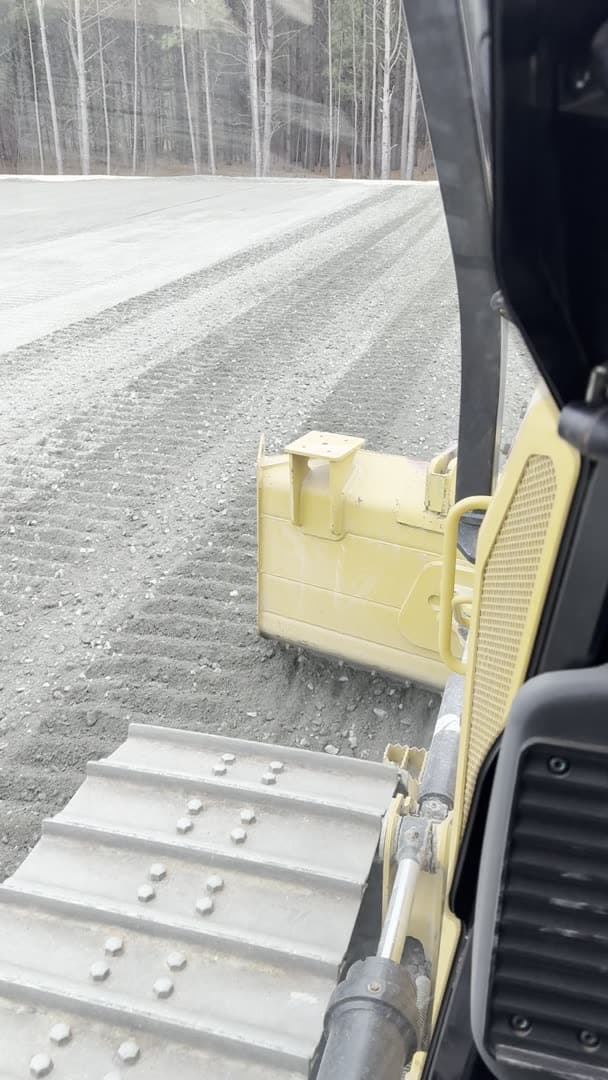
Driveways take more daily wear than any other piece of earthwork on a residential or farm property. Every vehicle that enters and leaves compacts the center, sheds water to the edges, and grinds the surface material down. Over time the crown flattens, potholes form, culverts silt in, and the driveway starts holding water instead of shedding it. That is when property owners call us.
Ward Excavation builds new driveways, rebuilds failing ones, and maintains private roads for residential, agricultural, and commercial properties across our 33-county service area. Most of the driveways and private roads in rural southeastern North Carolina are gravel or dirt — surfaces that need periodic grading, crown restoration, and material top-dressing to stay functional. We also build chip-seal and asphalt driveways, which are covered in more depth on our paving page.
Driveway work pairs naturally with our drainage and grading services. A driveway that washes out every spring usually has a drainage problem underneath it — a silted culvert, a missing ditch, or a grade that sends water down the driveway instead of off the sides. We fix the drainage and the driveway surface together so the repair lasts.
Gravel vs chip-seal vs asphalt
The three common private driveway surfaces each have a cost tier, a maintenance profile, and a set of conditions they work best in. Choosing between them is a practical decision based on traffic volume, slope, drainage, and how much the property owner wants to spend upfront versus maintaining over time.
Gravel is the lowest upfront cost. A properly built gravel driveway has a compacted sub-base, a layer of larger stone for structure, and a finish layer of crusher run that locks together underfoot and under tire. Gravel driveways need periodic grading to restore the crown and occasional top-dressing with fresh material as the surface wears down. They work well for low-to-moderate traffic, rural properties, farm access, and long driveways where the cost of paving would be prohibitive. The main disadvantage is ongoing maintenance — a gravel driveway that is not graded regularly loses its crown, develops ruts, and starts holding water.
Chip-seal is the middle tier. It is a layer of liquid asphalt sprayed onto a prepared base, then covered in crushed stone chips and rolled. The result is a hard, durable surface that sheds water better than gravel and costs less than full-depth asphalt. Chip-seal works well for longer residential driveways and private roads with moderate traffic. It has a rougher texture than asphalt and needs a refresh coat every seven to twelve years, but it does not require the regular grading that gravel does.
Asphalt is the highest tier — a continuous hot-mix surface rolled smooth over a compacted stone base. Asphalt driveways shed water cleanly, handle heavy traffic, and look finished. A properly installed asphalt driveway lasts fifteen to twenty-five years before needing a major resurface. The tradeoff is upfront cost and the fact that asphalt requires a well-prepared base — asphalt laid on soft or poorly drained ground will crack and settle regardless of how thick the pavement is. Our paving page covers asphalt in detail.
We build all three types and regularly recommend one over another based on what we see during the site visit. A quarter-mile farm driveway on flat ground is almost always a gravel job. A hundred-foot residential driveway from the county road to the house is a good candidate for asphalt or chip-seal. There is no single right answer — there is only the answer that fits the property, the traffic, and the budget.
What's included
New gravel driveway construction
Building a gravel driveway from raw ground — sub-base grading, fabric installation where needed, base stone, and finish crusher run. Includes culvert installation at the road ditch crossing.
Driveway regrading and crown restoration
Regrading existing gravel and dirt driveways to restore the center crown that sheds water. Crown restoration is the most common driveway maintenance job we run and typically extends surface life by several years.
Gravel top-dressing
Adding fresh crusher run or gravel to worn driveways. Includes grading the new material to crown and compacting it to lock the surface together.
Private road maintenance
Periodic grading, material addition, and drainage maintenance for private roads serving residential communities, farms, timber tracts, and hunting properties.
Culvert installation and replacement
Installing new culverts at road-ditch crossings and replacing collapsed or undersized culverts that cause driveway washout. Proper culvert sizing prevents the backup-and-overflow cycle that destroys driveways.
Driveway drainage correction
Fixing the drainage problems that cause driveways to wash out, rut, or hold water. Typically involves ditch cleaning, culvert work, and regrading the driveway surface as a combined scope.
Access road construction
Building new access roads to residential lots, farm fields, hunting camps, and timber stands. Includes clearing the corridor, grading the roadbed, installing culverts at drainage crossings, and placing surface material.
What to expect
- 1
Site assessment
We walk the driveway, check the grade, look at drainage and culvert condition, and determine what the surface and sub-base need. Existing driveways get a diagnosis; new driveways get a design.
- 2
Drainage and culvert work
If the driveway has a drainage problem — silted culvert, missing ditch, wrong grade — we fix it before touching the surface. Drainage is why most driveways fail, so it gets addressed first.
- 3
Sub-base preparation
Soft spots are dug out and replaced. The sub-base is graded to establish crown and drainage slope. On new driveways, geotextile fabric goes down where the native soil is soft.
- 4
Surface material placement
Gravel is placed and graded to crown. Chip-seal is sprayed and rolled. Asphalt is laid in lifts and rolled. The method matches the surface type.
- 5
Final grading and cleanup
Shoulders are graded, ditch tie-ins are shaped, and the finished driveway is checked for proper crown and drainage before we leave.
Questions homeowners ask
- What affects the cost of driveway work?
- Length is the primary driver — a hundred-foot driveway is a different scope than a quarter-mile farm road. After that: surface type (gravel is least expensive, asphalt most), whether drainage and culvert work is needed, sub-base condition (soft ground requires more preparation), and material delivery distance. We walk the driveway, measure the scope, and give you a single number that covers the complete job.
- What type of gravel works best for driveways?
- Crusher run is the standard surface material for gravel driveways in this region. It is a mix of crushed stone and stone dust that locks together under traffic and compaction, forming a hard surface that sheds water when properly crowned. Larger stone goes underneath as a base layer; crusher run goes on top as the driving surface. We use the stone size and gradation that fits your traffic level and soil conditions.
- How often does a gravel driveway need maintenance?
- Most gravel driveways benefit from regrading once or twice a year to maintain the crown, and a top-dressing of fresh material every few years as the surface wears thin. Driveways with heavier traffic or steeper slopes need maintenance more frequently. The crown is the detail that matters most — a flat gravel driveway holds water and deteriorates quickly, while a crowned driveway sheds water and lasts years longer between major repairs.
- Can you fix a driveway that washes out every time it rains?
- In most cases, yes. Chronic washout is almost always a drainage problem rather than a surface problem. The culvert under the driveway is clogged or undersized, the roadside ditch is silted in, or the driveway grade is sending water down the surface instead of off the sides. We fix the drainage first, then rebuild the surface. Fixing the surface without fixing the drainage is wasted money — the next heavy rain will undo the repair.
- How long does it take to build a new driveway?
- A standard residential gravel driveway — including culvert, sub-base, and surface — typically takes one day. Longer driveways, driveways that need significant grading or soft-spot repair, and driveways with multiple culvert crossings may take two to three days. Chip-seal and asphalt driveways take an additional day for the surface application after the base is prepared.
- Do you maintain private roads for neighborhoods or HOAs?
- Yes. We maintain private roads for residential communities, farm operations, and timber companies. Maintenance scope and frequency are set by the road owner. Some properties need quarterly grading; others need an annual pass. We can set up recurring maintenance or handle it on a call-by-call basis.
Permits and official resources
Official sources worth knowing before this kind of work starts. We handle the machine side; these are the agencies that govern the paperwork side.
Where we offer driveway services and road maintenance
Ward Excavation runs a 150-mile service radius from our Whiteville yard. Licensed and insured in North Carolina and South Carolina, we work driveway services and road maintenance jobs across the counties below and 25 more — from the Columbus County interior out to the Brunswick coast and across the line into Horry County, SC.
Jobs that go hand in hand with driveway services and road maintenance
Ready to start your project?
Family-run since 2001. Licensed and insured in NC and SC.