
Whiteville, NC · Since 2001
Tree and Stump Removal in Whiteville, NC
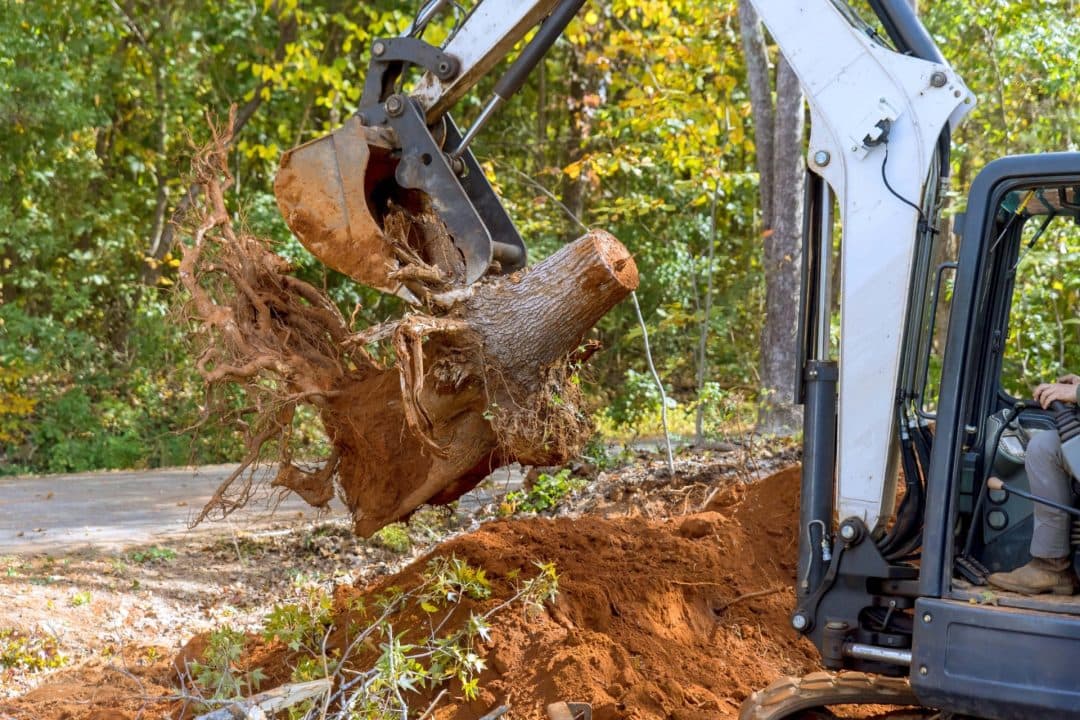
Customers call asking for tree removal and mean one of three different things. Some have a standing tree that needs to come down — it is in the way of construction, it is dead and leaning toward the house, or it is blocking a driveway extension. Some have a stump in the yard from a tree that was cut years ago and they want it gone. And some have both — a tree to fell and a stump to grind — but they are calling it all "tree removal" because the distinction does not matter to them. It matters to us because the equipment and the approach are different.
Ward Excavation handles tree removal and stump removal as separate operations that frequently happen on the same job. We fell and remove standing trees using excavators and chainsaws, and we grind or excavate stumps using stump grinders and excavators. We also take stump-only jobs for property owners who cut their own trees and need the below-grade work done afterward.
For larger-scale vegetation clearing — entire lots, multi-acre tracts, pasture reclamation — our land clearing and forestry mulching services are usually more efficient than individual tree-by-tree removal. This page covers the individual-tree and stump-specific work that does not require full-site clearing.
Trees vs stumps — they are different jobs
Tree removal is the above-ground job: felling the standing tree, cutting it into manageable sections, and removing the wood and brush from the site. The equipment depends on the tree’s size and location. Small trees in open areas can be pushed over with an excavator bucket and processed in place. Larger trees in tight residential settings need controlled felling with a chainsaw, directional cuts to drop the tree away from structures, and sectional removal of the trunk and limbs. The debris — trunk sections, limbs, brush — either gets hauled off, chipped on site, or stacked for the property owner depending on the agreement.
Stump removal is the below-ground job, and it comes in two forms. Stump grinding uses a rotating cutter head to chew the stump down to six to twelve inches below the ground surface. The grinding produces a pile of wood chips that fills the hole, and the remaining root system is left in the ground to decompose naturally over several years. Grinding is fast, relatively inexpensive, and sufficient for yards, landscaping, and most non-construction uses.
Stump excavation is the heavier option. An excavator digs out the entire stump and root ball, leaving a clean hole that gets backfilled with compacted material. Excavation is necessary when the stump location is on a future building pad, driveway, or utility corridor — anywhere that roots decomposing underground would cause settlement. Excavation is more disruptive to the surrounding area and more expensive than grinding, but it is the only option that fully removes the below-grade material.
On most residential jobs, we recommend grinding unless the stump is in a construction zone. For building sites, we recommend excavation in the building footprint and grinding everywhere else. The estimate specifies which method applies to each stump and why.
What's included
Individual tree removal
Felling and removing individual trees for construction clearance, safety, or property improvement. Includes controlled felling where trees are near structures, power lines, or other obstacles.
Stump grinding
Grinding stumps to six to twelve inches below grade using a mechanical stump grinder. The grinding chips fill the resulting hole and act as temporary ground cover. Suitable for yards, landscaping, and non-construction areas.
Stump excavation
Full excavation of stumps and root balls using an excavator. Leaves a clean hole that is backfilled with compacted material. Required for building pads, driveways, and utility corridors where subsurface roots would cause settlement.
Hazard tree removal
Removing dead, leaning, or storm-damaged trees that pose a risk to structures or people. Hazard trees require more careful felling plans because the wood may be weakened and the tree’s lean affects how it falls.
Debris hauling and chipping
All tree debris — trunk sections, limbs, brush, stump grindings — is either hauled to a disposal facility or chipped on site depending on the property owner’s preference and the volume of material.
Post-removal grading
Backfilling stump holes, grading the disturbed area, and restoring the ground surface after tree and stump work is complete. Prevents the divots and depressions that form when stump holes settle.
What to expect
- 1
Tree and stump inventory
We walk the property, tag the trees and stumps to be removed, note the sizes and species, and check proximity to structures, utilities, and property lines.
- 2
Felling plan
For standing trees, we determine the felling direction, identify overhead hazards (power lines, branches overhanging structures), and plan the equipment positioning.
- 3
Tree felling and removal
Trees are felled using chainsaw or excavator, sectioned as needed, and the debris is loaded or chipped. Brush goes to a pile or directly into a chipper.
- 4
Stump grinding or excavation
Stumps are ground to six to twelve inches below grade, or excavated entirely if the site requires full removal. Grinding chips fill the hole; excavation holes are backfilled with clean material.
- 5
Cleanup and grading
The site is cleaned of debris, stump holes are filled and graded, and the property is left in the condition specified in the estimate.
Questions homeowners ask
- What affects the cost of tree and stump removal?
- Tree size and species are the primary factors — a twelve-inch pine in an open yard is a different job than a thirty-inch oak next to a house with power lines overhead. Stump count and removal method (grinding vs excavation) affect the below-grade cost. Access matters too: trees that require crane-assisted removal in tight spaces cost more than trees that can be pushed over with an excavator in an open field. We walk the property, tag each tree and stump, and quote the specific scope.
- What is the difference between stump grinding and stump excavation?
- Grinding chews the stump down to six to twelve inches below the surface and leaves the root system in the ground. It is faster, less expensive, and less disruptive to the surrounding yard. Excavation removes the entire stump and root ball, leaving a clean hole. Excavation is necessary for building sites, driveways, and utility corridors where decomposing roots would cause settlement problems. We recommend grinding for most residential situations and excavation only where construction requires it.
- Do you remove individual trees or only clear entire lots?
- Both. Individual tree and stump removal is a standalone service. If you need one tree taken down or three stumps ground, we handle that as its own job. For clearing entire lots or multi-acre tracts, our land clearing service is typically more efficient because it uses different equipment and a different approach. We can help you decide which service fits during the estimate visit.
- How long does tree and stump removal take?
- A single residential tree — felling, debris removal, and stump grinding — typically takes half a day to a full day. Multiple trees or a small lot with a dozen stumps might take two days. The variables are tree size, stump count, access conditions, and whether debris is hauled off or chipped on site.
- Can you remove trees near my house or power lines?
- We remove trees near structures using controlled felling techniques — directional notch cuts that drop the tree away from the building. Trees near power lines require coordination with the utility company for de-energization if the tree is within the line clearance zone. We assess the risks during the site walk and explain the felling plan before work starts.
- Do you handle tree and stump removal outside Columbus County?
- Yes. We run tree and stump work across our full 33-county service area. Individual tree jobs pair with other work in the same area — if we are running a land clearing job in Bladen County and you have stumps to grind in the next town over, we can handle both in one trip. Call (910) 981-1119.
Permits and official resources
Official sources worth knowing before this kind of work starts. We handle the machine side; these are the agencies that govern the paperwork side.
Where we offer tree and stump removal
Ward Excavation runs a 150-mile service radius from our Whiteville yard. Licensed and insured in North Carolina and South Carolina, we work tree and stump removal jobs across the counties below and 25 more — from the Columbus County interior out to the Brunswick coast and across the line into Horry County, SC.
Jobs that go hand in hand with tree and stump removal
Ready to start your project?
Family-run since 2001. Licensed and insured in NC and SC.