
Whiteville, NC · Since 2001
Site Work and Pad Building in Whiteville, NC
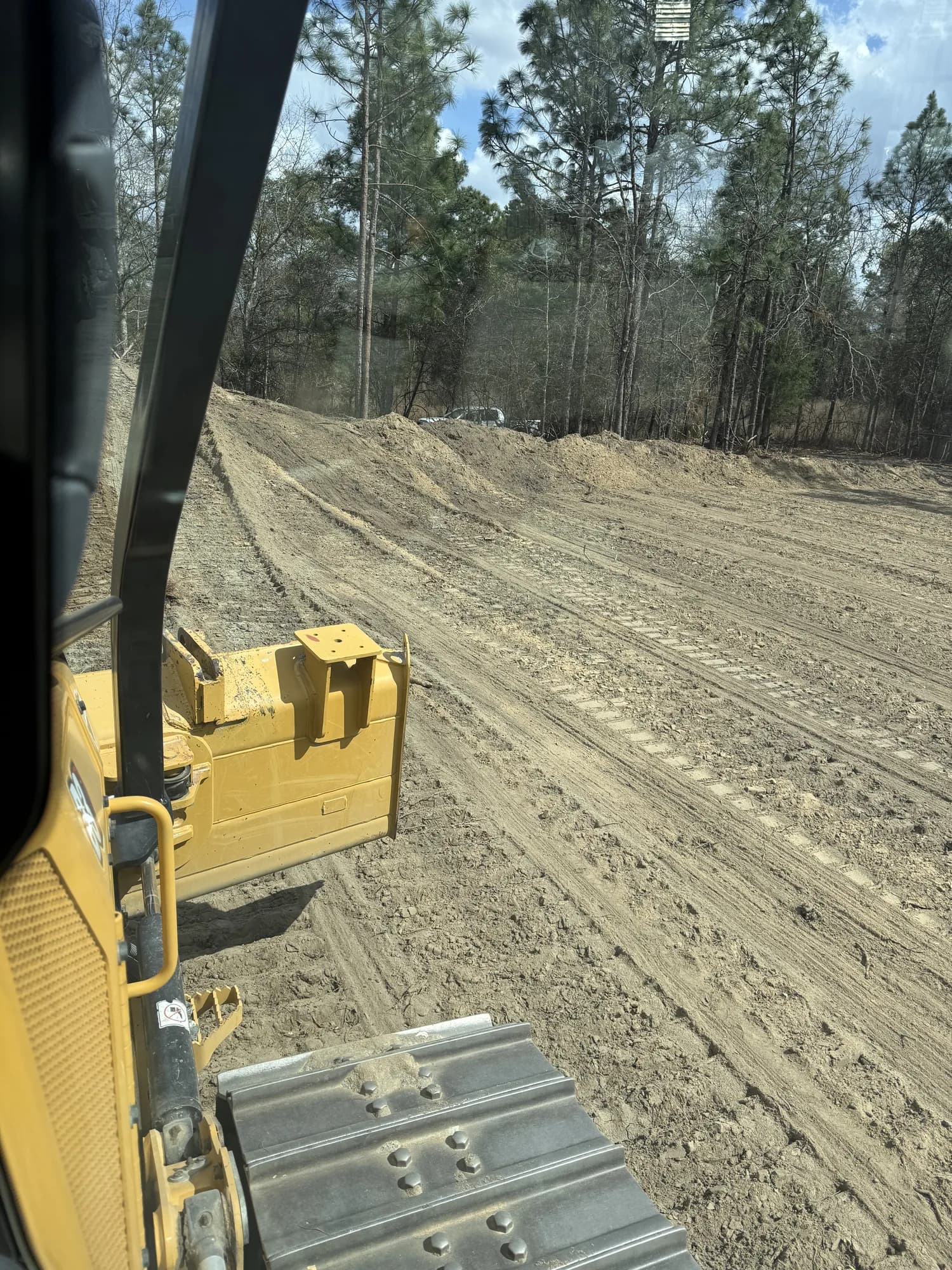
Before a builder pours a footing or a framer sets a sill plate, somebody has to turn a raw piece of land into a construction-ready site. That somebody is the site work contractor, and the quality of what they deliver determines whether the building that follows sits straight, drains clean, and stays put. Ward Excavation has run site work for residential and commercial projects across southeastern North Carolina since 2001.
Site work is the collective name for everything that happens between a property owner deciding to build and a builder starting vertical construction. Clearing the trees, stripping the topsoil, excavating to plan grade, compacting the building pad, installing erosion control, roughing in drainage, and building access — all of that is site work. On a typical residential lot in Columbus or Brunswick County, site work takes three to seven days. On a commercial pad or multi-lot subdivision, it can take weeks.
We handle site work as a single-contractor scope. One crew clears the lot, grades the pad, digs the utility trenches, installs the culverts, and hands off a finished site to the builder. That continuity matters because every phase of site work affects the next one — if the clearing crew leaves stumps in the pad area, the grading crew has to stop and deal with them. When one contractor handles both, the handoff problems disappear.
What building a pad actually involves
A building pad is not just a flat spot on the ground. It is an engineered earth platform designed to support a structure at a specific elevation with uniform bearing capacity across its footprint. Getting that right requires a sequence of operations that each depend on the one before it.
The first step is clearing the pad area down to mineral soil — all vegetation, topsoil, organic material, and debris has to come off. Topsoil looks solid but it is full of roots and organic matter that decompose over time, and a building pad that sits on decomposing topsoil will settle unevenly. The cleared topsoil gets stockpiled at the edge of the site for later use in finish grading around the completed building.
After clearing, the pad area gets cut or filled to the plan elevation. On flat coastal plain lots, this is usually a fill operation — importing clean material to raise the pad above the surrounding grade for drainage. On sloped sites, it is a cut-and-fill balance: dirt from the high side goes to the low side. The critical detail in either case is that fill gets placed in lifts — layers — and each lift gets compacted before the next one goes on top. Dumping ten feet of fill in one pile and running a dozer over the top is not compaction. It is a settlement problem waiting to happen.
Sub-base material selection matters on this soil. The coastal plain in southeastern North Carolina has sandy topsoil over clay in most locations, and the mix varies from site to site. Sandy material drains well but has lower bearing capacity. Clay holds weight but retains water and expands when wet. The right pad design uses the site’s own soil profile where possible and imports engineered fill where the native material is not suitable.
The last step before handoff is verifying the finished elevation and surface across the pad area. The pad needs to be flat within the tolerance the building plan specifies, and it needs to drain away from the center toward the perimeter so water does not pool under the future foundation. When the pad is verified, the site is ready for the foundation crew.
What's included
Residential building pad
Constructing a compacted earth pad for a single-family house or manufactured home. Includes clearing, topsoil stripping, fill placement in lifts, compaction, and final grade verification. Most residential pads take two to four days depending on the amount of earth that needs to move.
Commercial building pad
Larger-scale pad construction for commercial buildings, retail sites, and industrial facilities. Commercial pads involve greater volumes of earthwork, deeper compaction, and often require engineered fill specifications from a geotechnical report.
Site clearing and grubbing
Removing all vegetation, stumps, roots, and topsoil from the building footprint. Grubbing takes out the below-grade material that clearing leaves behind — root balls, buried stumps, and organic debris that would cause settlement if left under the pad.
Rough and finish grading
Shaping the site to plan contours. Rough grading moves bulk earth; finish grading establishes the final surface elevation and drainage slopes. Grading is covered in more detail on our grading and excavation page.
Erosion and sediment control
Installing silt fences, sediment traps, and stabilization measures to prevent soil from leaving the site during construction. Required by county erosion control ordinances on most land-disturbance projects.
Access road construction
Building temporary or permanent access roads from the public road to the building site. Includes grading, culvert installation at ditch crossings, and surface material placement. Access roads often become permanent driveways after construction.
Utility rough-in coordination
Excavating trenches for water, sewer, and electrical lines that need to go in before or during pad construction. We coordinate with utility installers so trenches are dug, lines are laid, and backfill happens in the right sequence.
Driveway and parking area base prep
Grading and compacting the sub-base for driveways and parking areas as part of the overall site work scope. Proper base prep under a driveway determines how long the surface material lasts before it needs repair.
What to expect
- 1
Site plan review
We review the building plan, site survey, and any engineering specifications to understand the target pad elevation, drainage requirements, and utility locations.
- 2
Clearing and grubbing
Trees, brush, stumps, and topsoil are removed from the building footprint and access areas. Topsoil is stockpiled for later finish grading.
- 3
Rough excavation and earthmoving
Bulk earth is moved to bring the site close to plan grade. Excess material is hauled off or used elsewhere on site.
- 4
Pad construction and compaction
Fill is placed in lifts and compacted to achieve the bearing capacity the structure requires. Each lift is compacted before the next is placed.
- 5
Drainage and erosion control
Culverts, swales, and erosion control measures are installed to manage water during and after construction.
- 6
Final grade and builder handoff
The finished pad elevation is verified, drainage is confirmed, and the site is handed off to the foundation or framing crew.
Questions homeowners ask
- What determines the cost of site work?
- Acreage, the volume of earth that needs to move, whether fill material needs to be imported, the number of trees and stumps on site, drainage complexity, and how far the site is from our yard in Whiteville. A half-acre residential lot on flat ground with light timber is a different scope than a five-acre commercial pad with twenty-foot grade changes and heavy hardwood. We walk every site before quoting because no two jobs have the same variables. Call (910) 981-1119.
- How long does site work take before my builder can start?
- Most residential sites — a single house lot that needs clearing, pad building, and driveway base — are ready in three to seven days depending on weather. Commercial sites and multi-lot subdivisions take longer because the earthwork volumes are larger and compaction testing is more involved. We schedule site work to align with the builder’s start date so the site is fresh and not sitting exposed to weather longer than necessary.
- What is the difference between site work and grading?
- Grading is one component of site work. Site work is the full scope — clearing, grubbing, earthmoving, pad building, drainage, erosion control, and access construction. Grading establishes the elevations and slopes within that scope. On simple jobs, site work and grading happen almost simultaneously. On complex jobs, they are distinct phases with different equipment.
- Do you build pads for manufactured homes?
- Yes. Manufactured home pads have specific requirements for level tolerance and bearing capacity because the home arrives as a finished unit and gets set on the pad by crane or jack system. The pad has to be right before the home arrives — there is no regrading after delivery. We build manufactured home pads to the installer’s specifications and verify them before delivery day.
- Can you handle the entire site prep scope or just part of it?
- We handle the full scope — clearing through builder handoff — as a single contract. We also take partial scopes when a builder or owner needs only one phase (pad building without clearing, or grading without drainage). Single-contractor site work is usually faster and cheaper because there are no handoff gaps between sub-contractors, but we work either way.
- What happens if you hit rock or unexpected material during pad construction?
- Unexpected material below grade — rock ledges, buried concrete, old debris — is common on properties in this region that have been used before. We remove and haul the material, adjust the grade plan if necessary, and document the change. If the unexpected material affects the project cost materially, we discuss it with the property owner before proceeding. The estimate includes an honest statement about what happens when site conditions differ from expectations.
- Do you work with builders and general contractors?
- Regularly. A significant portion of our site work is contracted through builders and GCs who need a reliable site prep crew that shows up on schedule and delivers a pad that meets their spec. We can work from the GC’s site plan, communicate directly with the foundation or framing crew, and adjust the schedule when the overall project timeline shifts.
Permits and official resources
Official sources worth knowing before this kind of work starts. We handle the machine side; these are the agencies that govern the paperwork side.
Where we offer site work and pad building
Ward Excavation runs a 150-mile service radius from our Whiteville yard. Licensed and insured in North Carolina and South Carolina, we work site work and pad building jobs across the counties below and 25 more — from the Columbus County interior out to the Brunswick coast and across the line into Horry County, SC.
Jobs that go hand in hand with site work and pad building
Ready to start your project?
Family-run since 2001. Licensed and insured in NC and SC.