
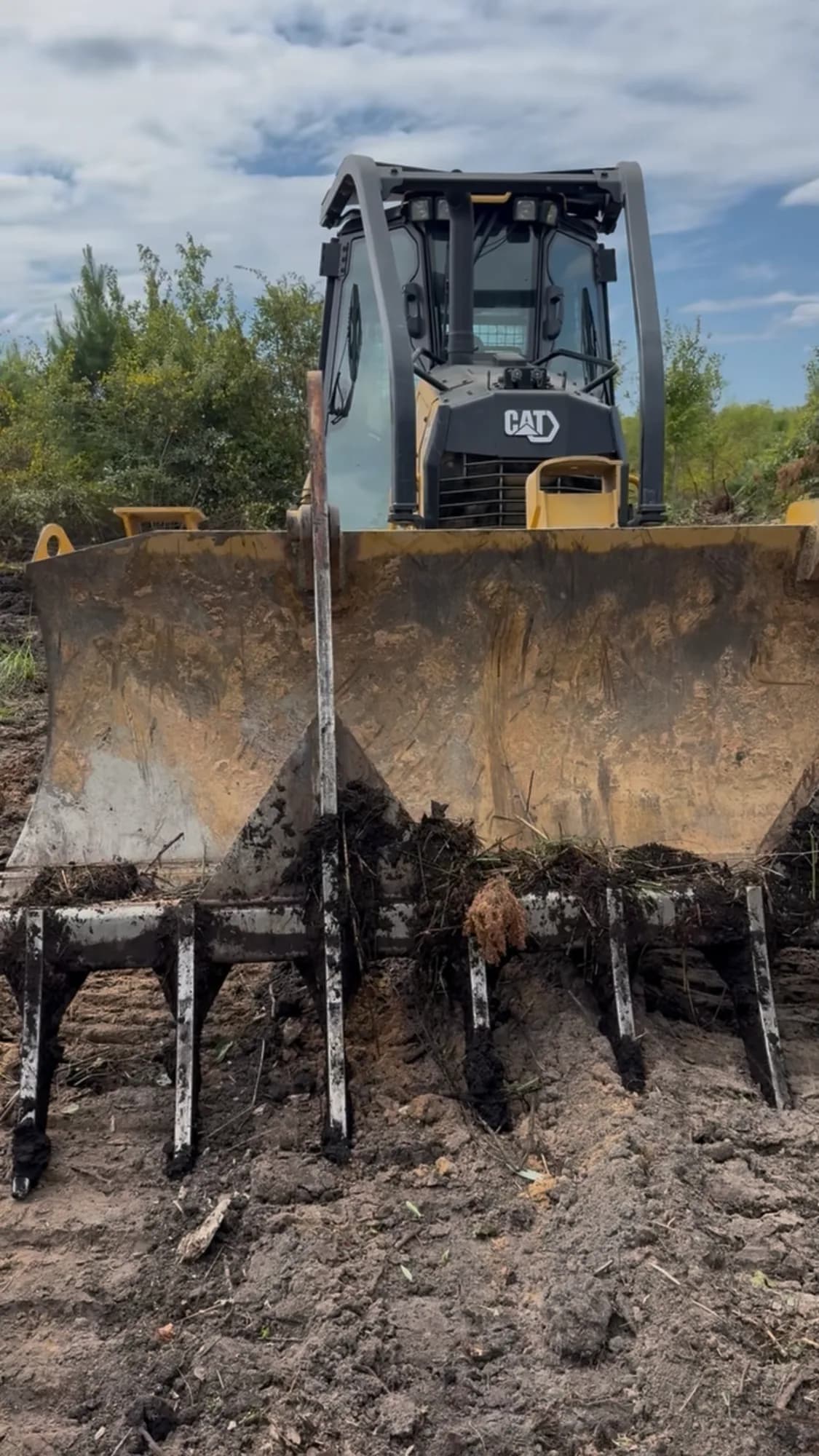
Search for land clearing cost in North Carolina and you will find per-acre numbers that disagree with each other by a factor of five. That is not because half the internet is wrong. It is because "an acre of clearing" is not one product. An acre of scattered scrub pine on dry, sandy ground with road frontage is a different job from an acre of mature hardwood on wet bottomland at the end of a narrow easement — different machines, different hours, different disposal, sometimes different permits.
Ward Excavation has been clearing land in southeastern North Carolina since 2001. The honest answer to "what does clearing cost" is that it depends on about eight things, and you can identify most of them standing at your own property line. This post walks through them, so when the quotes come in you can tell why the numbers differ and which one actually matches the job you need done.
Why quotes on the same acreage vary so widely
A clearing quote is not really a price for acreage. It is a price for machine hours, disposal, and risk. Two five-acre parcels can carry very different amounts of all three, and two contractors can read the same parcel differently depending on the equipment they run and the corners they are willing to cut.
The contract language matters as much as the land. "Cleared" can mean brush cut off at the ground and nothing else. It can mean trees down and stumps ground below grade. It can mean stumps grubbed out entirely, roots and all, with the ground left ready to grade and seed. Those are three different jobs at three very different prices, and a cheap quote is often a quote for the first job when you thought you were buying the third. Make sure every quote you compare defines "cleared" in writing.
Vegetation and stumps set the machine hours
Density and species drive productivity more than anything else. A machine moves fast through scattered scrub and slows to a crawl in a thicket of sweetgum and brier that has grown unchecked for twenty years. Trunk diameter matters too — small stems feed through a mulcher steadily, while large hardwood gets worked piece by piece. Same acreage, very different day counts.
Then there is what happens below the surface. Leaving stumps mulched or ground flush is the least expensive path. Grubbing them out — digging each root ball, hauling it away, and filling the holes — adds excavation time, trucking, and disposal. If the land is headed for a building pad or a driveway, stumps generally need to come out. If it is going to pasture or view clearing, they often do not. What the land is for sets the spec, and the spec moves the price.
Ground conditions, terrain, and access
Wet ground is slow ground. Saturated soil ruts under tracked equipment, forces matting or waiting, and stretches every phase of the work. Low bottomland that holds water after rain will almost always quote higher than a well-drained upland parcel of the same size. Slopes, ditches, and old debris piles buried in the brush add hours the aerial photo does not show.
Access matters more than most owners expect. Equipment arrives on lowboy trailers that need room to pull in, turn, and unload. A parcel with open road frontage takes minutes to get onto. A parcel behind a narrow gate at the end of a soft easement can take half a day before the first tree comes down. Mobilization is also its own line item — the distance from the contractor's yard to your property is built into every quote, which is one reason hiring from outside your region rarely saves money.
What happens to the debris
Cleared material has to go somewhere, and the three destinations carry three different costs. Mulching it in place is usually the cheapest — the material is ground where it stands and left as a layer on the soil. Push-and-burn sits in the middle and depends on burn conditions and local permit rules. Hauling debris off-site costs the most, because every load means truck time and disposal fees, and a heavily wooded acre produces far more material than most people expect.
Permits enter the math at a specific point. North Carolina's sedimentation and erosion control rules are generally triggered when a project disturbs an acre or more, which brings plan requirements most property owners have never dealt with. Wetlands and stream buffers add their own approvals regardless of size. A quote from a contractor who never asked what is being disturbed, or how much of it, has not priced the whole job.
Forestry mulching versus conventional clear-and-grub
Method is the biggest single fork in the price. Forestry mulching grinds standing vegetation into mulch in one pass — no burn piles, no haul-off, minimal ground disturbance, and often fewer permit complications because the soil is never opened up. It is usually the cheaper path on moderately wooded ground, and it leaves a walkable surface with the root systems still holding the soil.
Conventional land clearing — pushing, grubbing, piling, and disposal — costs more and disturbs more, but it is the right call when the land needs to be build-ready: stumps out, roots out, ground open for grading. The two methods do not produce the same product. Comparing a mulching quote against a clear-and-grub quote is comparing two different jobs, so decide what the land is for first, then compare quotes for the same method.
The per-acre pricing trap
Per-acre pricing misleads most on small parcels. Every clearing job carries fixed costs — moving machines in, setting up, moving them out — that stay the same whether the job is one acre or twenty. On a small lot those fixed costs are spread across almost nothing, so the per-acre figure looks high and no contractor's number will match what a pricing chart promised.
The math runs the other way on larger tracts. Once equipment is on site and working, each additional acre costs less than the one before it — mobilization is already paid for, the crew is in rhythm, and disposal runs in volume. That is why multi-acre clearing consistently comes in at better per-acre numbers than small jobs, and it is the work we are built around: acreage clearing, site preparation, and the road and pavement work that usually follows, across southeastern North Carolina and the Pee Dee region of South Carolina. We covered how local pricing behaves in our post on affordable land clearing in Whiteville.
How to get a real number fast
The fastest route to an accurate price is a site visit with the right information ready. Four things: the acreage — a survey or tax parcel map is ideal, but a county GIS printout helps — what is on the land now, what the land is for, and your timeline. Those four answers let a contractor pick the method, spec the machines, and price the disposal instead of guessing at all three. It is why our quote form asks for your acreage up front — it is the first thing that shapes the number.
Ward Excavation is family-run and has been doing this work out of Whiteville since 2001. If you have a parcel anywhere in southeastern North Carolina or the Pee Dee region of South Carolina, request a quote or call (910) 981-1119. We will look at the property, define what "cleared" means for your job in writing, and give you a number that holds.